
Most Georgia homeowners notice their gutters only when water starts spilling over the edge during a hard rain. What they miss is what happens behind that overflow, quietly, for months, sometimes years, before anyone spots a problem on the roofline itself.
By the time paint bubbles or a board feels spongy underfoot on a ladder, the damage has usually been building since the last time the gutter clogged and nobody noticed.
How Water Starts Wicking Behind the Gutter Line
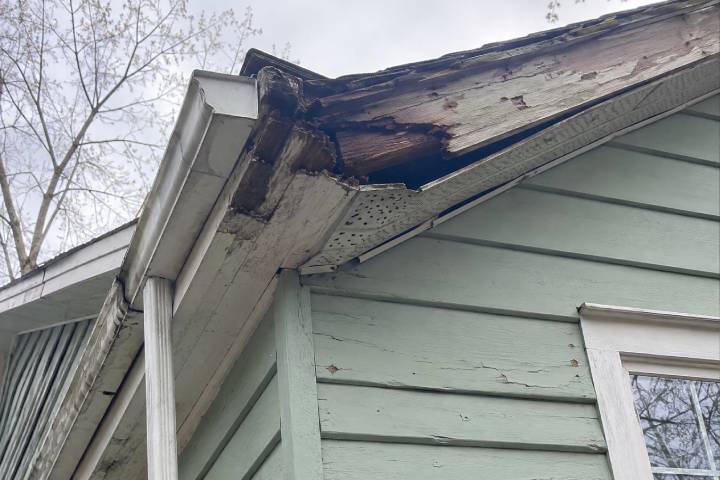
A gutter that overflows doesn't just spill water onto the ground below. It pushes water backward, over the lip and behind the trough, where it soaks directly into the wooden fascia board the gutter is hung from. This is the point where a simple clog becomes a structural issue rather than a cosmetic one. Once water gets behind the gutter, gravity pulls it downward into the soffit, the horizontal panel that closes off the underside of the roof overhang. That moisture has nowhere fast to go, and in a humid climate it lingers far longer than most homeowners expect. A backward overflow pattern is often the very first mechanical failure that sets everything else in motion, and it frequently starts with a clogged trough nobody bothered to clear before the last big storm season. If you've ever noticed black streaks and grit that warn of overflow, that's usually the visible clue pointing to a much less visible problem happening behind the board.
| Stage | Warning Sign | What's Happening |
|---|---|---|
| Overflow | Water spills behind gutter lip | Soaks into fascia board |
| Paint failure | Peeling, bubbling, streaking | Moisture trapped under paint |
| Soft spots | Board gives under thumb pressure | Wood fiber breaking down |
| Insect activity | Bees and ants tunnel wood | Rot accelerates faster |
| Hanger failure | Gutter sags or detaches | Screws lose solid grip |
The First Sign: Peeling Paint and Faint Streaking
Peeling or bubbling paint on the fascia is rarely about age alone. It's almost always a sign that moisture is trapped underneath the painted surface, pushing outward as it tries to escape. In neighborhoods like Decatur's Oakhurst, where mature tree canopy shades rooflines for much of the day, that trapped moisture has even less chance to evaporate between rain events. A faint vertical streak running down from the gutter seam is another early tell, often mistaken for dirt when it's actually a sign of chronic dampness working its way down the board face. Homeowners who catch this stage early save themselves a lot of trouble later, because paint failure is still a surface problem. Left alone, it becomes a wood integrity problem, and that's a much more expensive fix.
Soft Spots: When the Fascia Board Stops Doing Its Job
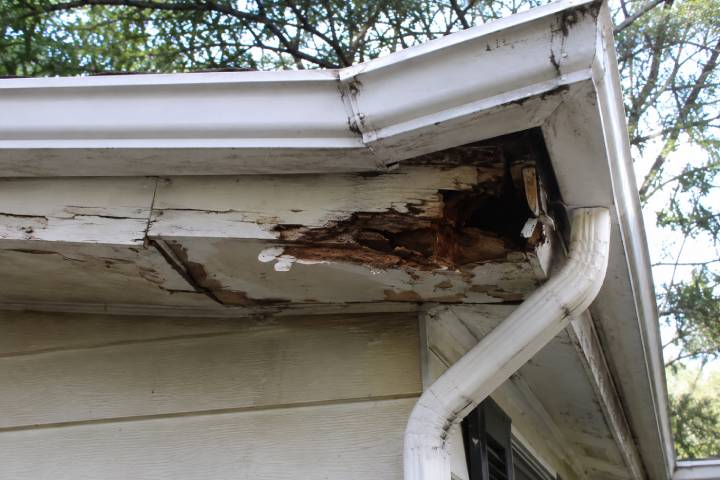
Press a thumb into a fascia board that's been chronically wet, and you'll feel the difference immediately. Healthy wood resists pressure. Compromised wood gives a little, sometimes a lot, and that softness is the wood fiber breaking down from the inside out. This is the stage where a roofline stops being a purely cosmetic concern and starts becoming a safety one. A gutter that once held firm now has less to hold onto. In Macon's Shirley Hills, where many homes feature older wood fascia rather than newer composite materials, this soft-spot stage tends to show up earlier than in newer construction. The load-bearing capacity of the board drops steadily, and once it's gone, no amount of caulk or paint restores it. At that point the only real fix is a full board replacement, not a patch.
Georgia Humidity and Why the Wood Never Really Dries
In drier climates, a soaked fascia board might dry out fully between rain events and never rot at all. Georgia doesn't offer that luxury for most of the year. Between the coastal damp along the southern counties and the humid inland summers, wood that gets wet behind a gutter often stays damp for days rather than hours. This is the same pattern discussed in our piece on the coastal damp that never lets wood dry, and it applies well beyond Savannah itself. Down in Brunswick's Old Town, where salt air and humidity combine, that persistent dampness accelerates rot timelines noticeably compared to drier inland regions. It's not one big soaking that ruins a fascia board. It's the repeated cycle of wet and never-quite-dry, month after month, that eventually breaks the wood down.
Carpenter Bees and Carpenter Ants Move Into Softened Wood
Once wood softens, it stops being a barrier and starts being an invitation. Both carpenter bees and carpenter ants actively seek out moisture-damaged wood because it's easier to tunnel through than sound lumber. A vetted pro in our Macon network has described finding both insects active in the same fascia board on more than one job, drawn by the same softened grain. This isn't a coincidence. It's a predictable next step once wood integrity drops below a certain point. Carpenter bees drill round, clean holes to nest, while carpenter ants tend to hollow out galleries along the softened grain. The insect activity itself rarely causes the initial rot, but it accelerates the damage considerably once it starts, turning a slow decay into a much faster structural loss. Left unaddressed, that combination of rot and infestation can spread into adjacent boards faster than most homeowners expect.
Hangers Pulling Free: The Gutter Loses Its Grip
Here's the detail that ties this whole progression together: a gutter is only as secure as the fascia board it's screwed into. When that board turns soft and punky, the hanger screws no longer have solid material to bite into. Over time, and sometimes quite suddenly during a heavy storm, hangers pull loose and the gutter sags, tilts, or detaches entirely from one section of the roofline. This is usually the point where a homeowner finally calls for help, though by then the fix involves more than just gutter repair. The board itself often needs attention before a gutter can be reattached with any confidence. A loose hanger pattern spreading along one section of roofline is a strong indicator that the rot has already progressed past the early stages, and a sagging trough line visible from the ground is rarely a subtle problem by that point.
Regional Patterns Across Georgia Rooflines
The rot progression looks slightly different depending on where in Georgia a home sits. Coastal properties near Brunswick's Old Town face near-constant humidity and salt air, which speeds up wood breakdown even with decent gutter maintenance. Inland communities like Macon's Shirley Hills deal more with seasonal pollen and leaf debris clogging troughs, which causes overflow-driven rot in more concentrated bursts tied to spring and fall. Suburban tree-canopy neighborhoods such as Decatur's Oakhurst see a steadier, slower version of the same problem, driven by shade that keeps wood damp longer after each rain. Regardless of the exact cause, the underlying mechanism is the same: overflow, dampness, softening, and eventual failure. This regional variation means a one-size-fits-all maintenance schedule rarely works well across the whole state, and a seasonal timing plan matters more in some areas than others. Regular downspout services that keep water moving away from the foundation and roofline play a real role in slowing this cycle down, no matter which part of the state a home sits in.
Protecting Your Roofline Before Rot Sets In
Catching this progression early is almost always cheaper and easier than repairing it late. Regular residential gutter cleaning keeps troughs flowing so water never gets the chance to wick backward into the fascia in the first place, and it's just as important for buildings under commercial gutter cleaning plans, where rooflines are larger and harder to inspect from the ground. Gutter Cleaner Georgia connects homeowners and property managers across the state with vetted local pros who understand these regional patterns, from coastal humidity to inland pollen seasons. Many of our network's providers offer a 45-day no-clog guarantee after a cleaning, along with free estimates from satellite imagery so you know what a job involves before anyone sets foot on your property. Pros are licensed and insured, and most send before and after photos by email the same day a job wraps up, so there's a clear record of what was found and what was fixed. With seasonal spring and fall plans available, it's easier to stay ahead of the wet season cycles that quietly eat away at fascia and soffit year after year.