
Georgia's humidity does a lot of the heavy lifting when it comes to green film on siding, but it rarely works alone. Gutters that are clogged, sagging, or overflowing are often the hidden partner in the problem, feeding moisture to exactly the spots where shade already keeps things damp.
Homeowners tend to blame the trees or the weather, and both play a role. But once you understand how water actually moves off a roof when a gutter fails, the pattern of green growth on a house starts to make a lot more sense.
Why Shade and Moisture Team Up on Siding
Algae and mildew need two things to thrive: shade and a steady water source. A shaded lot alone might stay damp longer after rain, but it usually dries out eventually. The real trouble starts when a gutter problem adds a constant moisture supply on top of that shade. Neighborhoods with mature tree canopies, like the areas around Peachtree City known for their shaded golf cart paths, see this constantly. The tree cover keeps walls cool and slow to dry, and if the gutters above are overflowing, that wall never really gets a chance to recover between storms.
This is why two houses on the same street can look completely different. One has clean gutters and a green-free exterior. The other has a persistent film creeping up from the foundation, fed by water that never really stops flowing where it shouldn't.
The Splashback Problem at the Base of the Wall
When a gutter fills past capacity, water doesn't just spill over the edge and disappear. It hits the ground, the mulch bed, or a walkway below and bounces back up onto the lower few feet of siding. That splashback carries dirt, organic debris, and moisture directly onto the wall, creating the exact damp, nutrient-rich surface that algae spores need to take hold.
Over time, this becomes a self-feeding cycle. Splashback deposits organic material, that material holds moisture longer, and the green growth spreads a little further up the wall with every heavy rain. It's a slow process, but it's a steady one, and it rarely reverses itself without some kind of intervention. A gradual buildup like this is easy to miss until the discoloration is already noticeable from the street.
Drip Lines: The Telltale Streak Gutters Leave Behind
If you look closely at a home with green siding, you'll often notice the growth isn't spread evenly. It's concentrated in a narrow vertical band, almost like someone drew a line down the wall. That's not a coincidence. A drip line on the siding traces exactly where the gutter overflows, and it will keep reappearing in that same spot until the overflow itself gets fixed.
This kind of localized, repeat staining is one of the clearest signs that a gutter section is clogged or pitched wrong, rather than just dirty. It's closely related to the streaks and stains gutters leave behind on fascia and trim, which come from the same overflow water carrying roof grit and debris down the face of the house. Once you know what a drip line looks like, you'll start spotting it on almost every house in a shaded neighborhood.
| Symptom | Cause | Where It Appears |
|---|---|---|
| Vertical drip line | Gutter overflow point | Narrow band on wall |
| Splashback stains | Water bouncing off ground | Base of the wall |
| Fascia streaks | Overflow carrying roof grit | Fascia and trim |
| Slow-drying green film | Shade plus steady moisture | Shaded, tree-covered walls |
| Earliest, worst growth | Least sun exposure | North-facing walls |
North-Facing Walls and the Worst Offenders
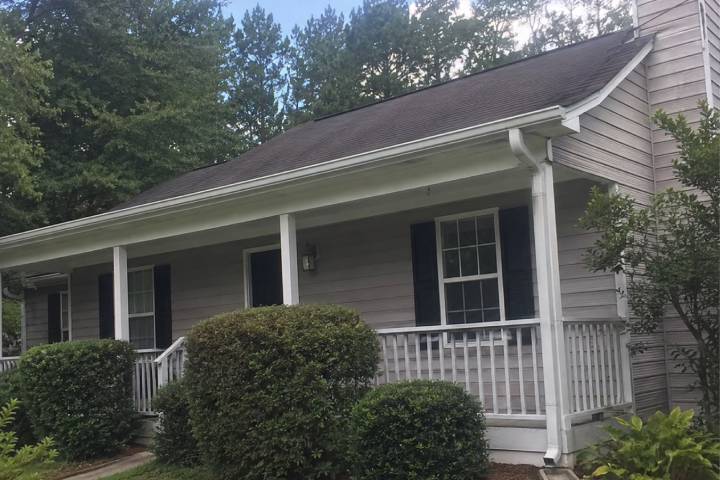
Sun exposure matters just as much as tree cover. North-facing walls dry slowest and green up first, because they get the least direct sunlight throughout the day. Combine a north-facing exposure with an overflowing gutter above it, and you've got the two worst conditions for algae growth stacked on top of each other.
This is a common complaint in older, tree-lined districts. In Augusta, homes near Olde Town frequently deal with this exact combination: mature trees, historic construction, and gutters that were never sized for the volume of leaf debris the neighborhood produces every fall. The north-facing sides of these homes often show green growth years before the sunnier sides ever do, which is a useful diagnostic clue for anyone trying to figure out where a gutter issue actually is.
Why Pressure Washing Alone Never Lasts
Pressure washing feels like a fix because the results are immediate and satisfying. The green disappears, the siding looks new again, and the problem seems solved. But if the gutter overflow that caused the growth in the first place hasn't been addressed, the algae comes right back, usually within a season or two.
Think of pressure washing as treating the symptom while leaving the cause untouched. The moisture source is still there, the shade hasn't changed, and the spores that survived the wash have everything they need to reestablish quickly. Homeowners who pressure wash every year without ever checking their gutters are essentially paying for a temporary result on a recurring basis, when a one-time repair to the actual overflow point would solve it for good.
What Overflow Does Beyond the Siding
Green siding is really just the visible symptom of a bigger drainage problem. The same overflow that's staining a wall is also dumping water somewhere near the foundation, and that has consequences of its own. It's worth understanding what that same overflow does at ground level, because foundation issues tend to be far more expensive to fix than a stained wall.
In warmer, humid parts of the state like Valdosta, sometimes called the Azalea City for its dense flowering landscape, the combination of heavy rainfall and thick plantings near the house can make this even harder to notice. The excess water gets absorbed into landscaping beds before homeowners realize how much of it is actually coming straight off a failing gutter system.
Fixing the System, Not Just the Symptom
Solving green siding for good usually means looking at the whole gutter system, not just the section directly above the stain. A sagging run, a disconnected downspout, or a clog several feet away can all send water to a spot that seems unrelated at first glance. This is where proper downspout services and hands-on gutter repair make a real difference, because they address the mechanical reason the water is escaping in the first place.
Sometimes the fix is as simple as re-pitching a short run of gutter so water actually reaches the downspout instead of pooling and spilling over. Other times it means replacing a cracked joint or adding a splash block to redirect water away from the wall. Either way, the goal is the same: stop the water from ever having a reason to overflow in that spot, which removes the ongoing moisture source that algae depends on.
Keeping the Green From Coming Back
Once the overflow is fixed, keeping siding clean becomes a maintenance question rather than a repair question, and that's a much easier problem to manage long term. Regular residential gutter cleaning keeps debris from building back up to the point where overflow starts again, which is the single biggest factor in whether green growth returns. For properties managing multiple buildings or larger rooflines, commercial gutter cleaning follows the same logic at a bigger scale.
A vetted pro in our network can usually spot a failing section on sight, often confirming the exact drip line a homeowner already noticed on their own siding. Our matched local pros back their work with a 45-day no-clog guarantee, offer free estimates built from satellite imagery so there's no guesswork involved, and send before and after photos by email the same day the work is done. Many homeowners also set up seasonal spring and fall plans, timing cleanings around leaf drop and spring pollen so the gutters never get the chance to overflow long enough for algae to take hold again.