
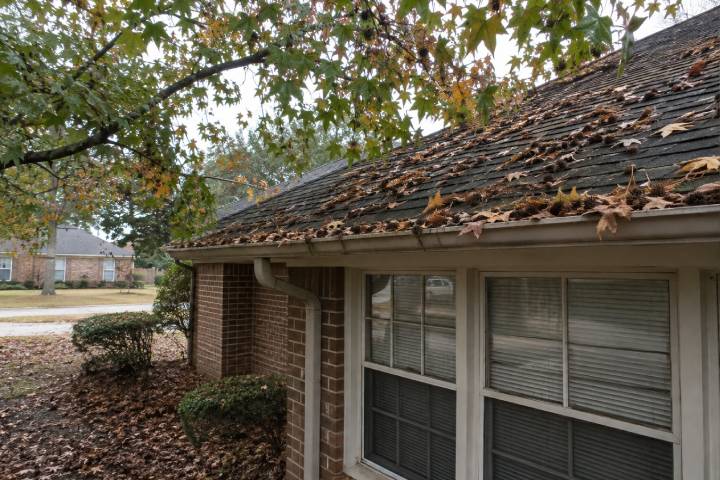
Ask ten homeowners in Georgia when their gutters need attention and you'll get ten different answers, because the truth is nobody's yard follows a single calendar. Leaf drop here doesn't arrive on one weekend the way it might in a place with a shorter, sharper autumn. It rolls across the state over roughly three months, starting in the mountains and finishing along the coast in a season that isn't even fall.
That rolling pattern is exactly why so many people end up cleaning their gutters once, feeling satisfied, and then getting blindsided by a second or third wave of debris weeks later. Understanding the timeline isn't just trivia. It's the difference between gutters that drain all winter and gutters that back up right when the heavy rains show up.
The Rolling Wave Instead of One Event
Most people picture leaf drop as a single dramatic week, but Georgia's geography stretches that window out considerably. Elevation, tree species, and even coastal air currents all push the timing in different directions depending on where you live. A single cleaning date that works fine for one region can be weeks too early or too late for another. Homeowners who treat the whole state the same way often end up with a false sense of done right before the next batch of leaves lands.
| Region | Peak Timing | Tree Type |
|---|---|---|
| North Georgia Mountains | Mid to late October | Hardwoods and pines |
| Metro Atlanta | Early to mid November | Oaks and maples |
| Statewide Holdouts | December into January | Water and willow oaks |
| Coastal Georgia | Early spring | Live oaks |
North Georgia's Mountains Move First
Up in the higher elevations, color change and leaf drop start earlier than almost anywhere else in the state, typically settling in around mid to late October. In Gainesville's Green Street Historic District, the older hardwood canopy means gutters start filling well before Atlanta residents even think about pulling out a ladder. This is also mountain country where debris isn't limited to leaves. A vetted pro in our Gainesville network will tell you that needle buildup and windblown debris from surrounding ridgelines complicate things further, which is part of why we cover why pine needles are not the only mountain problem in more detail elsewhere.
Metro Atlanta's Peak Window
Atlanta and its surrounding suburbs generally hit peak leaf drop in early to mid November, a few weeks behind the mountains. In neighborhoods like Inman Park, mature oak and maple canopies mean a heavy, concentrated drop rather than a slow trickle. That concentration is deceptive. A quick cleaning in late October can look thorough and still miss the bulk of the season's leaves, since the real volume hasn't fallen yet. Commercial properties in the same corridor face similar timing pressure, which is why many facility managers schedule commercial gutter cleaning around this specific window rather than guessing.
The Water Oak and Willow Oak Holdouts
Just when most homeowners think the season is winding down, water oaks and willow oaks throw a curveball. These species are notorious across Georgia for holding their leaves deep into winter, sometimes not fully dropping until December or even January. That means a property cleaned in November can still accumulate a serious load afterward. It's a late season surprise for anyone who assumes fall cleaning ends with Thanksgiving, and it's one of the most common reasons a single visit plan fails to keep gutters clear through the winter.
When No Trees Doesn't Mean No Problem
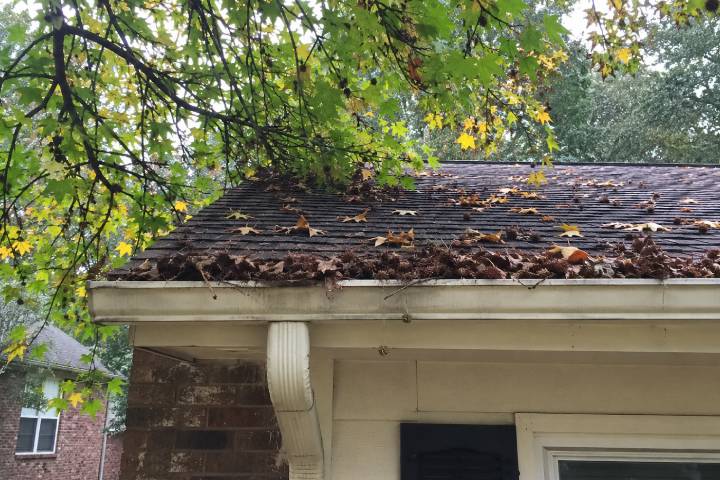
Not every clogged gutter traces back to a tree hanging over the roof. Wind carries debris from neighboring lots, roof grit builds up over time, and small nests or wildlife activity add their own mess. Homeowners with a bare yard often assume they're exempt, but plenty of properties end up needing attention anyway because of drifting debris alone. We've written specifically about roofs with no trees that still clog, and it's worth a read if your property seems like it should be low maintenance but somehow never is.
Coastal Georgia Breaks the Rules Entirely
Head toward the coast and the whole seasonal logic flips. Coastal live oaks, common throughout Savannah's Gordonston neighborhood, don't drop their leaves in autumn at all. Instead, they shed in early spring as new growth pushes the old foliage off the branch. That means a coastal homeowner who schedules a fall cleaning and calls it done for the year is missing the actual peak period entirely. Spring, not November, is the real crunch time for live oak canopies, and gutter plans built around a typical Georgia fall simply don't apply there.
Pines Add a Year-Round Wrinkle
Pines complicate the timeline further because they don't behave like deciduous trees at all. Needle drop is heaviest in fall, but pines shed some needles all year long, which means gutters under heavy pine cover rarely get a true off season. This steady trickle clogs downspouts just as easily as a big autumn dump of oak leaves, sometimes more so because needles compact into a dense mat. Reliable downspout services matter here as much as gutter clearing itself, since a clean gutter with a blocked downspout still backs up water right at the roofline.
Building a Schedule That Actually Matches Georgia
Once you see the full timeline, the fix is straightforward: stop thinking in terms of one fall cleaning and start thinking in terms of coverage across the whole rolling season. That's the logic behind seasonal spring and fall plans, timed specifically to catch mountain drop, metro peak, late holdout leaves, and coastal spring shed depending on where a property sits. Every job in our network starts with a free satellite estimate, so pricing reflects the actual roofline and tree cover rather than a generic guess. Crews send before and after photos the same day, and every pro is licensed and insured, backed by a 45-day no-clog guarantee that accounts for exactly the kind of delayed leaf drop this state is known for. Whether it's routine residential gutter cleaning or a gutter repair after a heavy debris season finally catches up with aging seams, matching the service to the actual timeline, not the calendar month, is what keeps Georgia gutters clear through every stage of the wave.