
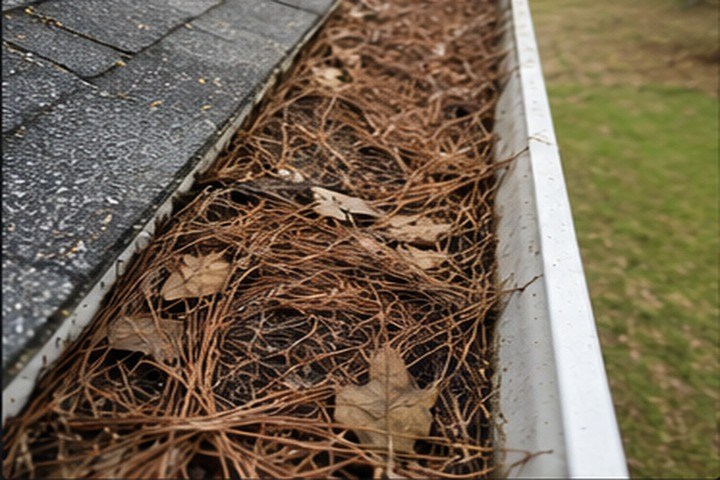
Ask anyone in the North Georgia foothills what clogs their gutters and the answer comes back in two words: pine needles. The region's tall pines are everywhere, and their needles have a well-earned reputation for finding their way into every trough and downspout. That reputation, though, tells only part of the story.
Homeowners who pin everything on pine needles often miss the other half of what is filling their gutters. From hardwood litter to pollen to the quirks of mountain terrain, North Georgia hands its gutters a varied diet, and treating pine as the lone villain leaves real problems unaddressed.
The Pine Needle Reputation
It is easy to see how pine got typecast as the regional gutter villain. The needles are visible, abundant, and they pile up in plain sight on roofs and in valleys all across the foothills. Pine needles are the obvious suspect, so they take the blame for nearly every clog by default. Around Lake Lanier in Gainesville, where pines crowd many lakefront lots, that assumption feels entirely reasonable.
The problem with an obvious suspect is that it stops the investigation early. Blaming pine alone means the other contributors never get examined at all.
Why Pine Needles Earn Their Bad Name
To be fair, the reputation is not undeserved. Pine needles are thin, wiry, and they weave together into dense mats that water struggles to penetrate. Needles knit into a mesh that catches everything else and turns a minor clog into a solid plug. They also slip through many gutter guards that would stop a leaf, which is why screens alone rarely solve the issue in pine country.
In Cumming's Vickery community, where pines mix with newer landscaping, this matting effect is a frequent cause of overflow. A bed of needles traps pollen, seeds, and grit until the whole mass hardens into place.
The Hardwood Litter Pine Gets Blamed For
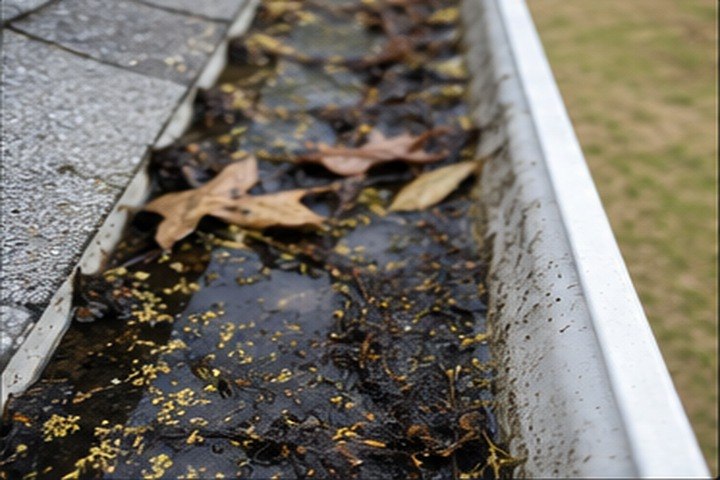
North Georgia is not only pines, and the hardwoods scattered through the region contribute plenty of their own debris. Oaks, maples, and poplars drop leaves, catkins, acorns, and seed pods that are heavier and slower to break down than needles. Hardwood debris decomposes into sludge, adding a dense bottom layer that needles alone would not create. In Dahlonega's historic district, where old hardwoods shade many homes, this mix is often the real story behind a stubborn clog.
Acorns and seed pods bring a particular nuisance of their own. Round, hard debris can lodge in downspout openings and block them completely, something a needle rarely does on its own.
| Debris Type | Source | Problem Caused |
|---|---|---|
| Pine needles | Tall regional pines | Mats block water flow |
| Hardwood litter | Oaks, maples, poplars | Decomposes into sludge |
| Acorns, seed pods | Hardwood trees | Clog downspout openings |
| Pollen | Spring pollen season | Binds debris into hard layer |
| Roof grit | Aging shingles | Adds to clogging mix |
| Steep terrain | Mountain roof pitches | Speeds runoff, worsens clogs |
Pollen and Grit Do Not Skip the Mountains
The northern part of the state gets the same spring pollen surge that coats the rest of Georgia, and the foothills are no exception. That pollen settles into gutters and binds with the needle mats into a heavy, mortar-like layer. Pollen turns loose debris into cement, and a bed of pine needles only gives it more to cling to. Roof grit from aging shingles adds yet another ingredient to the blend.
None of this is visible the way a clump of needles is, which is why it goes unnoticed. The invisible additions often do more to block flow than the needles that get all the attention. Homes in the Blue Ridge area see this combination as much as anywhere.
The spring aftermath looks the same at elevation too, detailed in the hidden gutter problem after Georgia's pollen season.
How the Terrain Adds Its Own Twist
Mountain country shapes how water and debris behave in ways flatter regions never deal with. Steeper roof pitches common in the foothills shed debris faster, concentrating it at valleys and gutter corners. Sloped terrain channels runoff with more force, which means a clog here can cause erosion and foundation issues more quickly. In the hills around Jasper, heavy seasonal rain meeting a blocked gutter can do damage in a hurry.
Elevation also brings its own pattern of storms and freezes that stress a gutter system. Faster, heavier runoff punishes any blockage harder than it would on level ground.
Timing matters as much as tree type, and Georgia's real leaf-drop timeline shows why one early cleaning misses half the season.
Why a Pine-Only Mindset Leaves You Exposed
The danger of blaming pine needles for everything is that it leads to half measures. A homeowner installs needle-rejecting guards, considers the job done, and never addresses the pollen, grit, and hardwood sludge still accumulating below. A single-cause assumption produces a single-cause solution that leaves most of the problem in place. The gutters keep clogging, and the guards take the blame for not working.
Effective maintenance has to account for the whole mix the region produces. The full range of debris calls for actual clearing, not just a barrier aimed at one ingredient.
Mountain lots give runoff nowhere gentle to go, and what happens when rainwater drains too close to your foundation is the downhill result.
How a Pro Handles the Full Picture
A thorough cleaning addresses everything North Georgia sends into a gutter, not just the needles on top. Clearing the needle mats, the hardwood sludge beneath, and the grit and pollen woven through restores the entire system at once. Before-and-after photos show the complete mix removed, so you can see what was really there under the obvious layer. A free satellite-based estimate accounts for the roof pitch and tree cover specific to your property.
Every job the network arranges carries the same assurance. The 45-day no-clog guarantee brings a vetted local pro back at no charge if a blockage returns soon after the work is done.
See Past the Pine Needles
Pine needles are a real problem in North Georgia, but they are far from the only one filling your gutters. Hardwood litter, pollen, grit, and steep terrain all play a part that a needle-focused approach tends to ignore. Treating the whole picture is what actually keeps a foothills gutter system flowing.
If your gutters keep clogging despite your best efforts against the pines, there is likely more going on above you. Book a free estimate for residential gutter cleaning or commercial gutter cleaning, and look into gutter repair or downspout services to keep the whole system clear.