For a few weeks every spring, Georgia turns yellow. Pollen coats cars, porches, and sidewalks so thoroughly that most homeowners are simply relieved when the haze finally lifts. The trouble is that the end of pollen season is not the end of the pollen, at least not for your gutters.
What rinses off your windshield in a single car wash behaves very differently up on the roofline. Long after the air clears, a heavy residue keeps working its way through your gutters, and the problems it creates often do not surface until the first hard summer rain.
Where All That Yellow Pollen Actually Ends Up
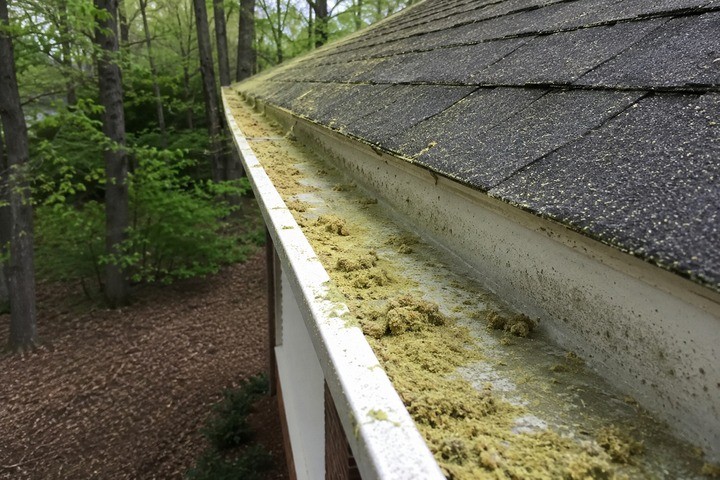
Rain does not make pollen disappear; it relocates it. Every storm during peak season flushes pollen off your roof and concentrates it in the one place built to collect runoff, which is your gutter system. A spring's worth of pollen can leave a band of dense sediment running the full length of every channel. In Atlanta's Morningside neighborhood, gutters rinsed clean in March routinely hold a firm yellow-brown crust by May.
That sediment is not loose like leaves, so it does not blow out or rinse away on its own. It bonds to the metal and to any debris already in the trough, building a base layer that only deepens as the weeks pass.
Why the Problem Shows Up Weeks After the Pollen Stops
The lag is what makes this so easy to miss. By the time your gutters are genuinely struggling, the visible pollen is long gone and nobody connects the overflow to a season that ended a month earlier. The damage is delayed, not avoided. A homeowner in Athens near Five Points might see water spilling over the back corner in June and assume a brand-new clog, when the real cause set up quietly in April.
Summer is also when Georgia's heaviest downpours arrive, so the timing could hardly be worse. A gutter already half-full of hardened residue has almost no capacity left when a real storm finally tests it.
Closer to the coast the mix never really dries out, which is part of what Savannah's humidity does to gutters that most homeowners miss.
The Slow Damage Pollen Sludge Leaves Behind
Beyond the immediate clog risk, that compacted layer holds moisture against the metal for weeks at a time. Standing dampness accelerates corrosion on the inside of the gutter, where you will never see it until a seam begins to weep. In Macon's Vineville district, older steel gutters are especially prone to this slow rusting from the inside out.
The added weight matters too, because saturated pollen sludge is far heavier than dry debris. Sagging sections and loosened spikes often trace back to a load the gutters were never built to carry through a long, wet summer.
Signs Your Gutters Are Still Holding Spring
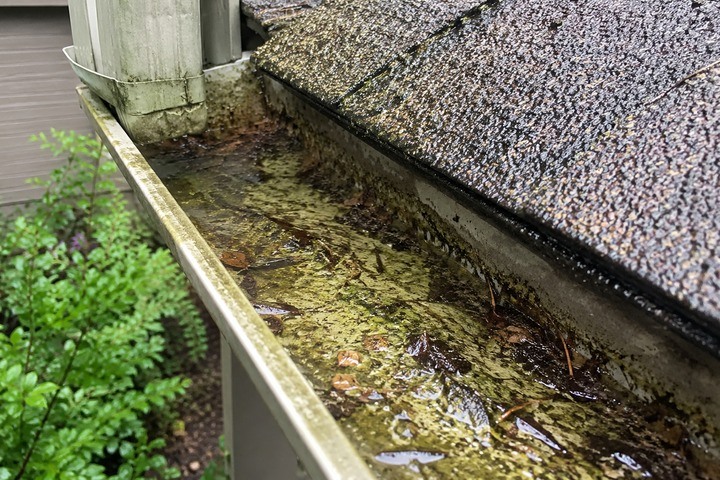
You do not always need a ladder to suspect a post-pollen problem. Streaky yellow-brown stains running down the outside face of the gutter are a strong clue that residue is sitting inside and spilling over during rain. Tiger striping like this is one of the most common things our network is called to inspect once summer arrives. Plants sprouting in the troughs are another giveaway, since pollen-rich sediment makes a surprisingly good seedbed.
Overflow that happens only during heavy rain, not light showers, points the same direction. A partly blocked channel can keep up with a drizzle while failing completely under a Columbus thunderstorm in a neighborhood like Green Island Hills.
| Sign | What It Suggests |
|---|---|
| Yellow-brown streaks on gutter face | Residue overflowing inside |
| Plants sprouting in the troughs | Sediment acting as a seedbed |
| Overflow only in heavy rain | Channel is partly blocked |
| No overflow during light showers | Confirms partial, not full, blockage |
For the bigger scheduling picture across the state, see how often gutters should be cleaned in Georgia, region by region.
Why a Post-Pollen Cleaning Beats Waiting for Fall
The instinct is to fold gutter cleaning into the usual autumn routine, but that leaves the hardened spring layer in place through the wettest months of the year. A dedicated late-spring clearing removes the residue while it is still soft enough to flush out easily. Wait until October and that same material has cured into a crust that takes far more effort to break loose.
This is exactly why our seasonal maintenance plans pair a spring visit with a fall one. Two well-timed cleanings bracket Georgia's two biggest debris events, the pollen surge and the leaf drop, instead of gambling everything on one annual pass.
Pollen sludge also sits well below the sightline, which is exactly why gutters that look clean from the ground so often are not.
How a Local Pro Confirms the Gutters Are Truly Clear
Because pollen residue hides below the rim, a glance from the lawn will never tell you whether it is gone. Before-and-after photos sent to your inbox show the real condition of each run, so you can see the crust that came out rather than take anyone's word for it. A free satellite-based estimate lets a pro map your roofline and gutter layout before the visit is even scheduled.
Every cleaning the network arranges carries the same safety net. The 45-day no-clog guarantee means that if a blockage resurfaces soon after service, a vetted local pro returns and clears it at no cost.
Clear the Pollen Before the Storms Arrive
Georgia's pollen season may end in spring, but its effect on your gutters can linger straight through to the year's worst weather. Clearing the residue early restores the full capacity your system needs before summer downpours put it to the test. A standing seasonal plan takes the guesswork out of timing it right.
If you have already spotted streaks or overflow, it is worth acting before the next storm. Start with a free estimate and book residential gutter cleaning or commercial gutter cleaning, and look into gutter repair or downspout services if sagging or overflow has already begun.