
Every fall, gutters fill with leaves and the same question comes up again: grab a ladder or call someone who does this for a living. There isn't one universal answer, but there is a clear way to think it through that keeps most homeowners off a hospital bracket and out of a costly mistake.
This guide lays out both sides honestly, from the houses where a Saturday cleanout still makes sense to the ones where the risk changes the moment you look up at the roofline.
When a Weekend Cleanout Still Makes Sense
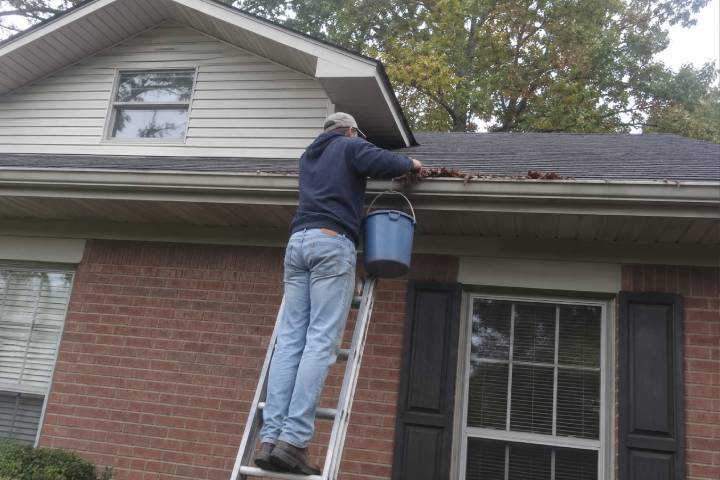
If your home is a single-story ranch with a low, walkable roofline and easy ground access on every side, doing the job yourself is a fair call. A basic extension ladder, gloves, and a plastic scoop will get most single-story systems clear of leaves and grit in an afternoon. The key variables are footing and help. Set the ladder on level, dry concrete or packed soil rather than mulch or a slope, and keep stable footing at all times by having someone hold the base steady while you work. Skip the job on windy days, and never lean past the ladder's rails to reach one more foot of gutter. For a home built this way, with no tricky angles and nobody working alone, a weekend cleanout is a reasonable line item on the fall to-do list.
Where the Risk Math Changes
The calculation looks completely different once you're dealing with two-story colonials or anything with a steep pitch. In older, established neighborhoods like Williams Park in Smyrna, plenty of homes are two-story colonials with rooflines that sit well above what a homeowner-grade ladder was ever designed to reach safely. Add a steep roofline to that extra height, and the margin for error nearly disappears. A ladder angled against a high eave puts more of your body weight over open air, and a single misstep at that height carries far more consequence than the same slip on a single-story home. If your house falls into this category, the honest answer is that DIY cleaning isn't just inconvenient anymore. It's a different risk category altogether.
| House Type | Roofline | Recommended Approach |
|---|---|---|
| Single-story ranch | Low, walkable | DIY cleanout is reasonable |
| Two-story colonial | High above ladder reach | Call a professional |
| Steep pitch roof | Steep angle, less margin | Call a professional |
| Heavy tree cover | Varies by property | Professional inspection helpful |
The Ladder Injury Nobody Plans For
Ladder falls are one of the most common serious injuries tied to home maintenance, and gutter cleaning is one of the most frequent reasons a ladder comes out of the garage each fall. Most falls don't happen because someone did something reckless. They happen because a rung was wetter than it looked, or a foot shifted an inch on a sloped patch of ground. Morning dew alone is enough to make both a ladder's feet and its rungs slick, even on a day that looks perfectly clear and dry by mid-morning. Waiting until surfaces have fully dried, checking that the ladder's feet are seated on solid ground, and never climbing in wet shoes are small habits that matter far more than most people realize.
What a Careful Ground-Level Look Still Misses
Plenty of homeowners walk the yard, glance up, and decide the gutters look fine from where they're standing. In leafy areas like Normaltown in Athens, where mature tree canopy drops debris steadily through fall, that quick visual check can be misleading. A gutter can look clear along the visible edge while sitting packed with compacted debris just a few inches back, hidden from any angle you can see from the ground. It helps to understand what even a careful ground-level look misses, since hidden buildup and small drainage blockages rarely announce themselves until water is already overflowing during the next heavy rain.
What Professional Tools Add That a Weekend Setup Doesn't
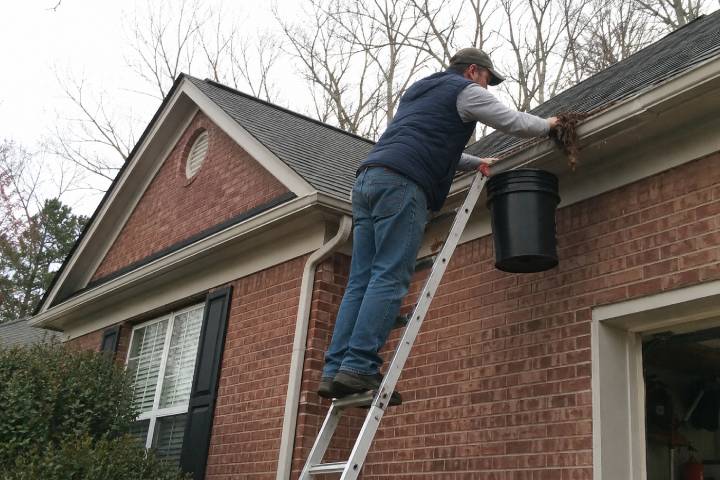
A trained crew brings more to a gutter cleaning than a ladder and a bucket. Most use standoff stabilizers that hold the ladder away from the gutter edge itself, which protects both the worker and the gutter while distributing weight more safely across the roofline. After clearing debris, a thorough pro runs water through the system as a flush test, confirming that water actually moves from the highest point of the run down through every downspout without backing up along the way. That step catches problems a visual clearing alone would miss entirely, and it's part of why professional service tends to catch small issues before they turn into expensive ones.
Do Gutter Guards Reduce the Chore?
Homeowners with heavy tree cover often ask whether guards can cut down on how often cleaning is needed at all. In wooded pockets like Green Island Hills in Columbus, where oak and pine debris falls steadily for months, it's worth understanding whether guards can reduce the chore before assuming they eliminate it entirely. Guards can meaningfully cut down on heavy leaf buildup, but they don't stop fine grit, pine needles, or seed pods from working through smaller mesh openings over time. Most guarded systems still need a periodic inspection at least once or twice a year, just on a lighter schedule than an unguarded roofline would require.
When Cleaning Turns Into Repair
Sometimes a routine cleaning turns up something a scoop and hose can't fix. Sagging sections, pulled fasteners, and separated seams usually mean the system needs more than debris removal, and that's when it makes sense to look into gutter repair rather than scheduling another cleaning. The same visit often reveals trouble further down the line, since clogged or crushed downspouts are a common source of water pooling near the foundation. Checking downspout services at the same time catches loose extensions and buried outlets before they cause soil erosion or basement moisture during the next round of heavy rain.
Choosing the Right Kind of Help for Your Property
Once you've weighed the height of your roofline, the slope, and how much tree cover surrounds your home, the decision usually becomes clear. Homeowners who fit the criteria for a safe DIY cleanout can keep doing it themselves, but everyone else is better served by a vetted local pro. Our network handles residential gutter cleaning for single-family homes across the state, and commercial gutter cleaning for property managers who need consistent scheduling across multiple buildings. Every job comes backed by a 45-day no-clog guarantee, and estimates are put together from satellite imagery so you get a number before anyone sets foot on your property. Crews across the state are licensed and insured, which matters whether you're booking a one-time cleanout or setting up a recurring plan for spring and fall.