
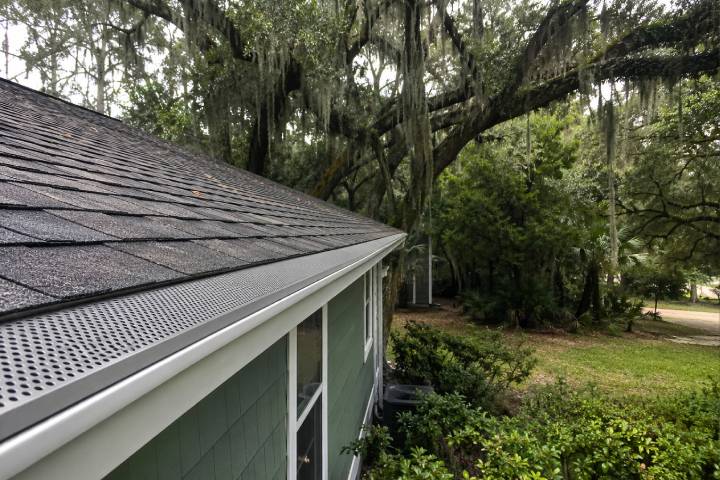
Coastal Georgia homeowners often assume they can follow the same gutter schedule their inland cousins use, and that assumption costs them. The canopy along the coast behaves on its own timetable, and gutters underneath it pay the price all year long.
If you live under a stretch of old growth trees in Brunswick or spend weekends near the marshes of St. Simons Island, you already know the mess is different here. It is not just leaves. It is moss, catkins, salt air, and a debris cycle that never fully stops.
Why Live Oaks Break the Autumn Rulebook
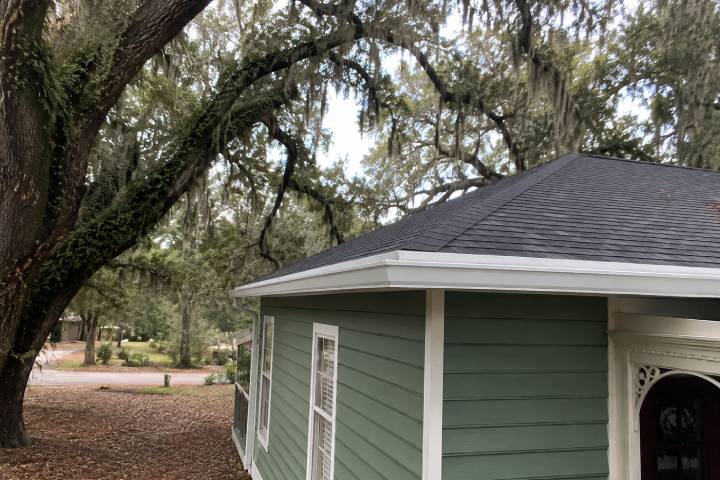
Most people picture leaf season as an October and November event. Live oaks do not cooperate. These trees are evergreen by habit, holding their leaves through winter, then dropping them in spring when new growth pushes the old foliage out. That means a homeowner under the oak tunnels of Savannah's Historic District can have clean gutters in November and a clogged system by April.
This timing quirk trips up a lot of coastal residents who plan cleanings around what they remember from childhood up in Atlanta or Macon, and it often leads to a missed spring window that causes problems all summer. For a broader look at how timing shifts region to region, Georgia's region by region leaf calendar lays out exactly why the coast runs on a different clock.
The Catkin Problem Right Behind the Leaf Drop
Just when the old leaves finish falling, live oaks send down a second wave. Catkins, those small flowering clusters, drop right after the spring leaf shed. They are lightweight but dense, arriving in volume and packing into gutter corners and downspout openings with surprising thoroughness.
A vetted pro in our Brunswick network describes catkin season as a hidden clog risk because homeowners assume the mess is over once leaves stop falling. It is not. The catkins keep coming for weeks, filling in behind the leaf debris and setting up blockages that will not show themselves until the next hard rain.
Spanish Moss: Beautiful Until It's in Your Gutter
Spanish moss is one of the most photographed features of coastal Georgia, and for good reason. It drapes over oak limbs in soft gray curtains and gives neighborhoods like Old Town Brunswick their distinct character. But moss is an epiphyte by nature, meaning it survives on moisture and air rather than soil, and that biology makes it a problem the moment it lands in a gutter.
Moss holds water like a sponge. A clump that blows off a tree branch during a coastal storm can sit in a gutter channel and stay saturated for days. That weight adds strain, and the trapped moisture keeps the metal underneath wet far longer than a normal leaf pile would. Over time, that constant dampness accelerates rust and weakens seams, especially on older systems that have not been inspected in a while.
Salt Air Never Clocks Out
Inland Georgia gutters deal with pollen, leaves, and the occasional ice storm. Coastal gutters deal with all of that plus a steady drip of salt exposure from ocean breezes. Salt accelerates corrosion damage on metal fasteners, hangers, and seams, and it does this quietly, without any dramatic storm event to point to.
Homes near St. Simons Island often show corrosion patterns that inland homes of the same age simply do not have. It is a slow, steady process, but it compounds every season the gutters go uncleaned or uninspected. Combine that with humidity's own effects and you get a maintenance environment that demands more attention, not less. If you want the fuller picture of how moisture works against your system here, everything else Savannah humidity does to gutters covers the mechanics in detail.
| Debris Type | When It Appears | Main Risk |
|---|---|---|
| Old oak leaves | Spring, not fall | Fills gutters unexpectedly |
| Catkins | Right after leaf drop | Packs into corners, downspouts |
| Spanish moss | Blown off during storms | Holds water, causes rust |
| Salt air | Year round | Corrodes fasteners and seams |
Why Standing Water Becomes the Real Enemy
Once leaves, catkins, and moss combine in a gutter channel, they create a dam. Water backs up behind that dam instead of draining, and that standing water becomes the actual damage source, more so than the debris itself. Wood fascia softens. Paint bubbles. Foundation soil erodes near downspout exits that never get a chance to drain properly.
This is where clogged downspouts turn into a bigger structural issue than most homeowners expect. A blockage that seems minor in July can mean water pooling against a roofline by the time winter rains arrive. Reliable downspout services address this exact failure point before it becomes expensive.
What a Coastal Maintenance Calendar Actually Looks Like
Because live oaks shed in spring rather than fall, a coastal gutter calendar needs two cleaning windows instead of the single autumn push that works fine in north Georgia. One cleaning should land after the spring leaf and catkin drop finishes. Another should come before hurricane season ramps up, since storm winds are what typically launch moss clumps into open gutter channels in the first place.
A pro working the Savannah Historic District oak tunnels will tell you that skipping either window almost guarantees a mid season surprise. The debris mix here does not politely wait for a convenient time. It builds steadily, and it builds fast once storm season winds pick up. Routine residential gutter cleaning timed to this pattern, rather than a generic fall only schedule, is what actually keeps coastal systems clear.
When Damage Has Already Set In
Even with good timing, coastal gutters take a beating that inland systems rarely see. Salt corrosion, moss weight, and standing water all chip away at seams, brackets, and joints over time. When a homeowner notices sagging sections or rust streaks running down siding, that is usually a sign the damage has moved past what cleaning alone can fix.
At that point, targeted gutter repair becomes the more sensible move rather than waiting for a full failure. Catching a weakened seam or a corroded hanger early, especially in homes near Brunswick's Old Town where humidity and salt exposure overlap constantly, saves a much larger repair bill down the road. It also protects the fascia and foundation work that a full gutter failure would otherwise put at risk.
Getting the Right Coastal Plan in Place
Coastal Georgia properties, whether a private home under an oak canopy or a commercial building near the marsh, need a maintenance rhythm built around this region's actual debris cycle, not a generic statewide schedule. That is where commercial gutter cleaning and residential service plans built for spring and fall coastal patterns make a real difference, since both catch the leaf, catkin, and moss waves at the right time rather than months too late.
Our network connects homeowners and property managers with licensed and insured local pros who already understand how live oaks, moss, and salt air interact in this part of the state. Estimates come from satellite imagery, so scheduling a first look does not require someone climbing a ladder just to quote the job. Every completed cleaning includes before and after photos emailed the same day, and seasonal spring and fall plans are built specifically around the coastal shedding calendar described above rather than a one size fits all approach borrowed from inland Georgia.