You just paid for gutter cleaning, and the crew's truck is barely out of the driveway. So how do you actually know the work got done right, and not just glanced at from the ground? Georgia's mix of pine straw, oak leaves, and sudden downpours means a sloppy cleaning job shows up fast, usually during the next storm, and by then the crew is long gone and hard to reach. This is where a simple checklist saves homeowners real money and real headaches. The good news is that verifying a proper gutter cleaning doesn't require a ladder or an engineering degree. It just requires knowing what honest work looks like, and what a rushed job tries to hide.
The Ground Level Blind Spot
Standing in your driveway in a neighborhood like Windward in Alpharetta, you can see maybe the front edge of your gutters, and even that view is deceiving. Pine needles mat down flat against the trough floor and disappear from sight, while standing water hides behind the fascia where you'd never spot it without climbing up. This is exactly why photo proof matters so much more than a verbal "all done" from the crew leader.
A lot of homeowners fall into what's known locally as the looks clean from the ground trap, assuming that because nothing is visibly overflowing, the system is clear. That assumption costs people money every fall when the first hard rain reveals what was actually left behind. The fix isn't more trust, it's better documentation standards built into how the job gets closed out.
| Check | Sign of Honest Work | Sign of Rushed Job |
|---|---|---|
| Photo documentation | Timestamped before and after shots | Vague invoice, no photos |
| Sound test | Audible rush at each downspout | Silence or weak trickle |
| Debris removal | Bagged and hauled away | Dumped in flower beds |
| Guard refitting | Flush with no gaps | Crooked, gapped panels |
| Post-rain check | No fresh stains on siding | New drip stains or streaking |
Why Photo Documentation Became the Industry's Honesty Test
A few years back, most gutter cleaning invoices just listed a service date and a total. No pictures, no proof, just a promise. That worked fine until homeowners started noticing water stains on siding weeks after a "completed" job, with no way to prove whether the crew ever actually got up on the roof.
Now, timestamped photos of the actual troughs, not stock images pulled from a website, have become the baseline expectation. A vetted pro in our Atlanta network near Buckhead will typically snap a shot looking down the trough before touching anything, then another after clearing it, so the homeowner can compare the two side by side. That kind of visual record is the difference between a service you can verify and one you just have to hope was done well.
What a Vague Invoice Is Actually Hiding
An invoice that just says "gutters cleaned" tells you nothing about which sections got attention, whether the downspouts were checked, or if guards were removed and refitted. Vague paperwork usually means a vague job. It's worth asking directly for section by section notes, especially on larger homes or commercial buildings where crews might rush through the back side of a roofline nobody sees from the street.
This is part of a bigger pattern worth understanding, and you can read more about how honest crews confirm the work even on properties without a single overhanging branch. A property in Warner Robins with mostly open sky above the roof can still clog from shingle grit and wind-blown debris, so the invoice needs to reflect real inspection, not just a quick pass with a leaf blower. Clear line items protect the homeowner just as much as they protect the crew's reputation.
The Sound Test Nobody Talks About
Here's a detail most homeowners never think to ask about: a proper flush test sends water audibly through every downspout, and you can hear it happen. When a crew runs a hose down the trough after clearing debris, water should rush through the elbow and exit at the bottom with a clear, steady sound. Silence, or a weak trickle, means there's still a blockage somewhere in the run.
This is one of the fastest ways to confirm the job without climbing anything yourself. Ask the crew to run the test while you're standing nearby, and listen for that audible rush at each downspout outlet. If a section sounds muffled or dry, it's worth asking about dedicated downspout services to clear whatever the initial cleaning missed, since a clogged downspout can undo the benefit of a perfectly clean trough above it. Good crews welcome this kind of on-site verification because they've already done the work correctly.
Where the Debris Actually Ends Up
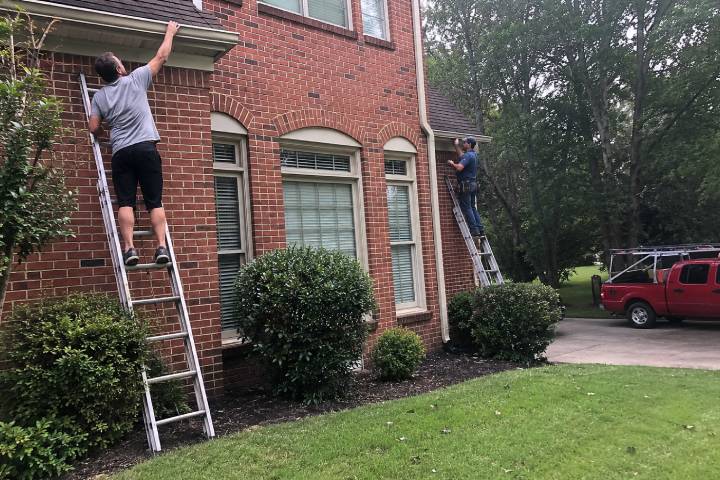
Watch what happens to the material that comes out of your gutters. Debris should be bagged and hauled away, not shaken out into your flower beds or left in a soggy pile against the foundation. A crew that dumps leaves and grit directly into landscaping is creating a second cleanup job for you, and it's often a sign they're moving too fast to do the rest of the work carefully either.
This matters just as much for commercial properties as residential ones. A retail strip or office park relying on commercial gutter cleaning needs debris hauled off entirely, since piles left near entrances or parking areas create liability and drainage problems of their own. Ask for bagged removal as a standard part of the service, and confirm the crew isn't leaving loose debris anywhere on the property before they leave.
Guards Refitted the Right Way
If your home has gutter guards, cleaning them properly means removing them, clearing what's trapped underneath, and refitting them flush against the trough afterward. A guard that's been popped back on crooked or left gapped at the seams will let debris right back in during the next windy stretch, undoing the whole point of having guards installed.
Run your fingers along the edge after the job if you can safely reach it, checking for flush alignment and no visible gaps at the seams. Guards that were removed but reinstalled sloppily often need a follow-up visit for gutter repair sooner than they should, since bent or loosely fitted panels wear out faster and stop doing their job. A careful crew treats guard reinstallation as its own final step, not an afterthought.
The Real Test: No Fresh Stains After the Next Rain
The most honest proof of all comes after the crew has already left. Wait for the next real rain, then walk your property and look at the siding below the gutter line. Fresh drip stains, streaking, or dark trails running down the fascia mean water is overflowing somewhere it shouldn't be, which points straight back to a section that wasn't actually cleared.
This follow-up check costs nothing but a few minutes, and it's the difference between assuming the job worked and knowing it did. If you spot new streaking after November's rains roll through, that's your signal to call the crew back before the problem becomes a bigger repair down the line rather than a quick fix.
Choosing a Crew That Documents Everything
The checklist above only works if you're hiring a crew willing to prove their work upfront, not one that gets defensive when you ask questions. Look for pros who offer residential gutter cleaning with photos included as standard practice, not an upcharge, and who are comfortable walking you through what they found before and after. That transparency is usually a good indicator of how they'll handle everything else, from scheduling to actual cleaning quality.
Most jobs through our network come with before and after photos emailed the same day so you're never left guessing what happened up on the roof. Free estimates built from satellite imagery mean you get a fair price before anyone even shows up, and the 45-day no-clog guarantee backs the work if debris finds its way back in sooner than it should. For homeowners who'd rather not think about this twice a year, seasonal spring and fall plans keep the whole thing on autopilot, with documented results every single visit.