Every spring and summer, Georgia's gutters become prime real estate for animals looking for a warm, sheltered place to raise a family or build a hive. Homeowners rarely notice until autumn, when leaves pile up and something unexpected tumbles out during a routine cleaning.
From Athens to Columbus, local pros see the same pattern year after year. What looks like a simple leaf clog often turns out to be a nest, a den, or a wasp comb that has been quietly changing how water moves off the roof for months.
Why Gutters Look Like Prime Habitat to Wildlife
Gutters offer shade, shelter, and easy access to eaves and attic gaps, which makes them irresistible to birds, squirrels, and insects alike. A sheltered channel that stays dry most of the year and runs the length of a roofline is exactly the kind of spot wildlife looks for when nesting season begins.
Add in the fact that most homeowners only look at their gutters from the ground, and you get a perfect setup for surprises. A hidden nesting site can sit undisturbed for a full season before anyone climbs up to check.
| Animal | Where Found | Season | Risk |
|---|---|---|---|
| Sparrows/Starlings | Downspout elbows | Spring | Blocks outlet, backs up water |
| Squirrels | Gutter run/fascia | Ongoing | Loosens fasteners, chews aluminum |
| Paper wasps | Under gutter lip | Late summer | Ladder hazard for crews |
Spring Arrivals: Sparrows and Starlings in the Elbows
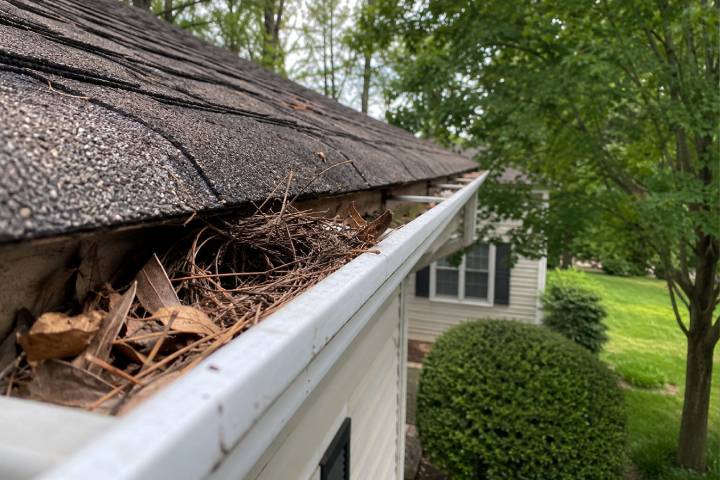
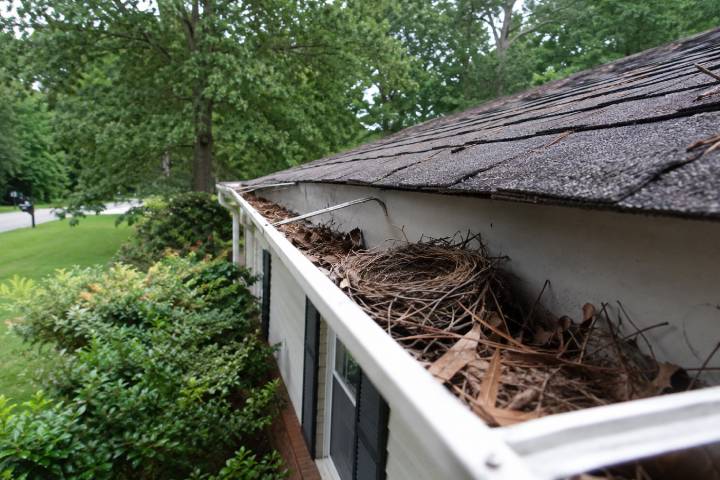
House sparrows and starlings are some of the earliest and most persistent gutter squatters in Georgia. They favor downspout elbows because the bend offers a tight, protected pocket that holds a nest in place even during heavy rain.
In neighborhoods like Athens near Five Points, older homes with narrow downspouts see this constantly. A single nest packed into that elbow can block the entire outlet while the gutter run above it still looks perfectly fine from a distance, which is part of why the problem goes unnoticed until water starts backing up somewhere unexpected.
Squirrels Treating the Gutter Line Like a Highway
Squirrels do not usually nest inside the gutter itself, but they use the gutter run as a raised path between trees and the roofline. Over a season of daily traffic, they can pack debris, loosen fasteners, and even chew at soft aluminum edges near the fascia.
In East Cobb, where mature tree canopies overhang most rooflines in Marietta, this kind of wear shows up often. A vetted pro in our Marietta network has pulled apart sections that looked structurally sound but had been quietly bent and loosened by months of squirrel traffic, work that eventually calls for proper gutter repair rather than a simple cleaning.
Late Summer Wasps Under the Lip
By late summer, paper wasps have often built out a full comb tucked under the outer lip of the gutter, hidden from view unless someone is standing directly beneath it. These combs grow quickly once the weather warms, and by September they can be surprisingly large.
This is one of the more genuinely dangerous surprises in gutter work. A comb under the lip is a real hazard for anyone climbing a ladder without knowing it is there, which is exactly why professional crews check before touching a single section by hand rather than assuming the visible gutter face tells the whole story.
Why Fall Cleaning Uncovers Most of It
Spring nests get built quietly, squirrel wear happens gradually, and wasp combs grow through the heat of summer. By the time fall arrives and leaves start piling up, all three problems tend to surface at once during the season's first thorough cleaning.
This is exactly why so many fall inspections turn up things homeowners never expected. It also explains why so many of the problems you cannot see from the ground only become obvious once someone is actually on a ladder, looking under the lip and into the downspout openings rather than just glancing across the roofline from the yard. Fall is when the real inventory of the year's wildlife activity finally gets tallied.
What Blocked Flow Actually Does to the System
A nest jammed into a downspout elbow does not just slow water down, it can stop it entirely, forcing overflow at the seams and joints instead of the outlet. Over weeks of standing water, this creates the kind of damp, stagnant pockets that lead directly to mosquitoes breeding in clogged gutters, especially during Georgia's warm, humid stretches.
Standing water also puts steady pressure on hangers and seams that were never designed to hold pooled weight. A slow leak point that starts behind a blocked elbow can spread into fascia rot long before anyone notices a drip at the corner of the house.
Businesses Face the Same Problem, Just Bigger
Commercial properties are not exempt from any of this. Longer gutter runs, more roof penetrations, and taller ladders mean more places for nests and combs to hide, and more risk when someone finally has to go check.
In Midtown, several buildings across Columbus have needed commercial gutter cleaning specifically because wildlife activity had gone unchecked for a full season. The scale is bigger, but the underlying issue is the same: unseen buildup hiding behind a gutter face that looks fine from the parking lot.
Getting Ahead of It Before Next Spring
The good news is that none of this requires guesswork once someone actually gets eyes on the system. A thorough residential gutter cleaning paired with a check of every downspout elbow catches most nesting activity before it becomes a bigger repair, and dedicated downspout services handle the elbows and outlets where sparrows and starlings do the most damage.
Gutter Cleaner Georgia connects homeowners and property managers with licensed and insured local pros who back their work with a 45 day no clog guarantee, so if something builds back up quickly, it gets handled. Estimates come from satellite imagery, so scheduling starts without anyone needing to climb a ladder first, and most crews send before and after photos the same day so you can see exactly what came out of your gutters. With seasonal spring and fall plans, the surprises documented here become far less likely to happen in the first place.